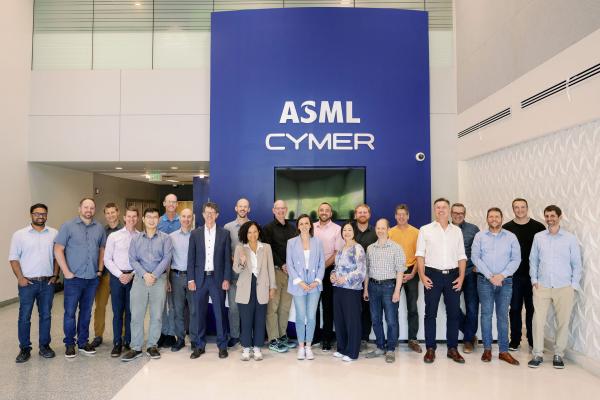
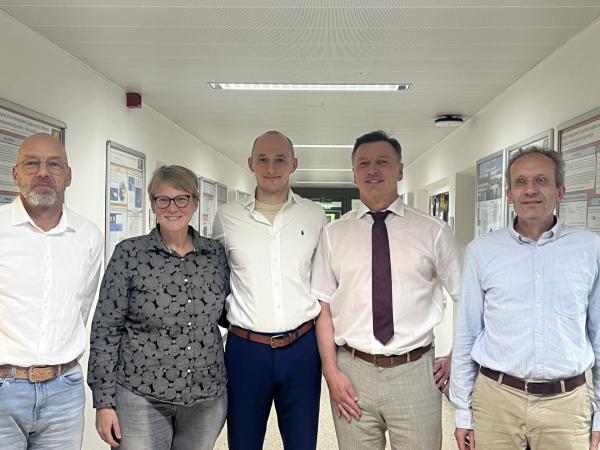
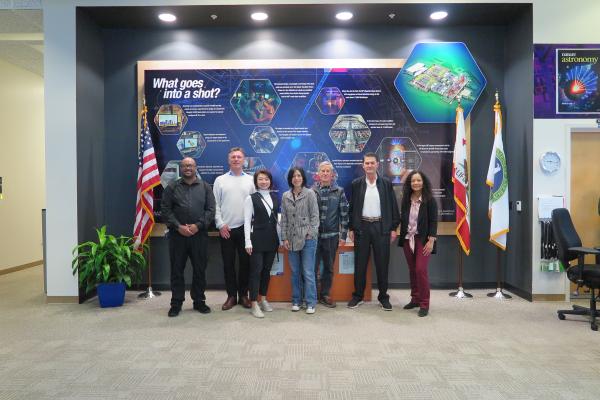
Stanford professors, including Prof. Debbie Senesky, Prof. Matthias Kling, and Prof. Siegfried Glenzer, visited ASML in San Diego for a day of workshops, networking and open discussions to identify topics for collaborative research and innovation.
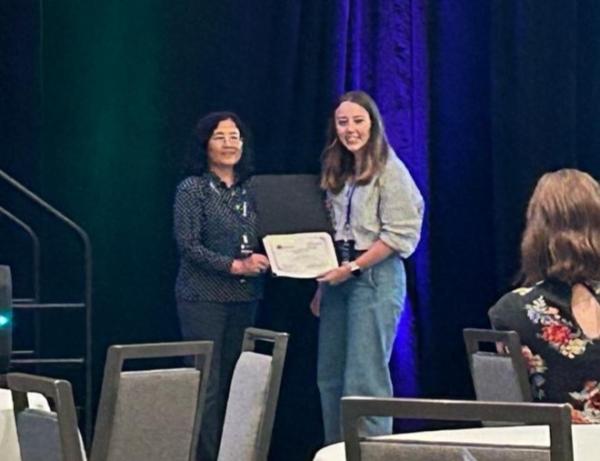
Graduate student Katie Wootten won the graduate student poster prize at the LaserNetUS Meeting for her poster "Implementation of a Liquid Sheet Target at MEC", presenting results from a recent LCLS beamtime.
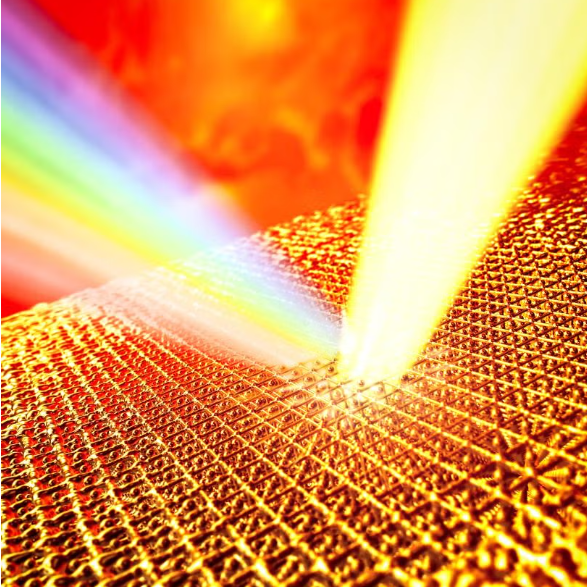
Researchers taking the first-ever direct measurement of atom temperature in extremely hot materials inadvertently disproved a decades-old theory and upended our understanding of superheating.
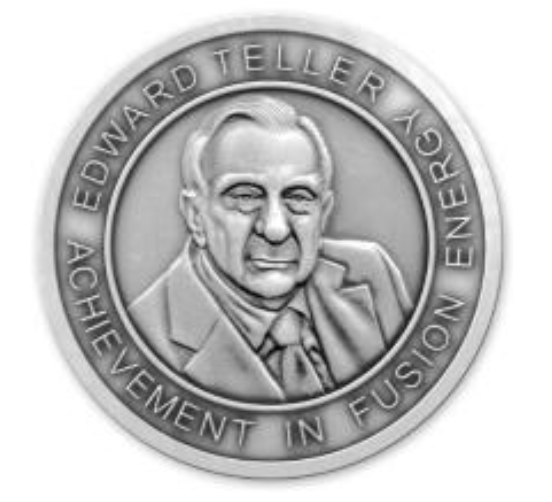
Siegfried Glenzer, the director of SLAC's HEDS division, has been awarded the Edward Teller Medal Award for 2025 by the American Nuclear Society. The award recognizes his leading role in advancing capabilities that enabled the National Ignition Facility to successfully demonstrate fusion gain, as well as his contributions to fundamental science and his mentorship of the next generation of scientific leaders. The Edward Teller Award is awarded biennially, and recognizes...
Using the DIPOLE 100-X high-power laser at the European XFEL's HED-HIBEF, an international research collaboration, including SLAC and led by the University of Rostock, has succeeded in studying liquid carbon in detail for the first time.
Griffin Glenn, a PhD student in our division, is a Student Ambassador for the LaserNetUS consortium. He was recently interviewed and talked about the benefits of access to the high power lasers that LaserNetUS provides. See the interview on LinkedIn!
Max Maigler, who worked with the HEDS division while a visiting student at Stanford, was awarded his PhD summa cum laude from the University of the Bundeswehr Munich for his thesis "Atomic-Scale Simulation of keV Xenon Ion Irradiation-Induced Erosion in Spacecraft Electric Thruster Materials".
Faculty members from the Stanford Robotics Center, along with members of the HEDS division, visited the National Ignition Facility at Lawrence Livermore National Lab to plan uses of robotics in support of fusion research.