News

  PhD student Griffin Glenn won the best student poster award at the IFE-STAR Conference for his poster "Laser-driven ion acceleration from pre-expanded converging H2O microjets"
IFE-STAR logo
  HEDS postdoc Alexis Marret received 205,6000 node hours at the Texas Advanced Computing Center for his allocation proposal titled ""Multi-scale modeling of ion beams from hybrid laser-plasma to RF accelerator".
Texas Advanced Computing Center Logo
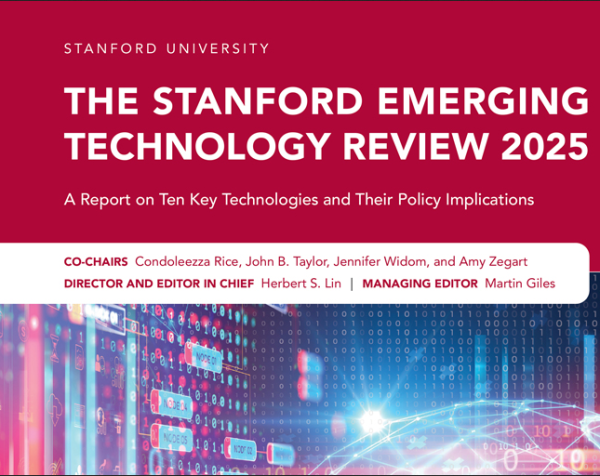
Review offers policymakers new insights into implications of cutting-edge technology, including laser science
SETR Report 2025 Cover
The HEDS division at SLAC National Accelerator Laboratory is leading groundbreaking advancements in fusion research through innovative technologies, aiming to tackle the challenges of harnessing fusion as a viable energy source.
Innovation News Network Logo
SLAC’s expertise in inertial fusion energy (IFE) led to its selection for the TINEX project.
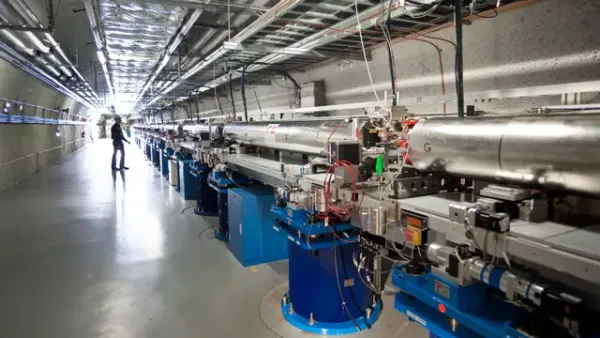
SLAC Accelerator
As a member of the General Atomics-led TINEX Collaborative, SLAC will help develop advanced target tracking technology allowing high-repetition lasers to hit each fusion fuel target with precision. 
Fusion Graphic
  The research proposal Helium Effects on the Phonon Dynamics of W-Re Alloys, led by Staff Scientist Mianzhen Mo, has been approved as a user project at Los Alamos' Center for Integrated Nanotechnologies. This project will enable members of our division to implant helium defects in W-Re alloys and investigate their impact on phonon behavior using the ultrafast electron camera at SLAC’s MeV-UED facility. The findings will be important for validating interatomic potential...

Center for Integrated Nanotechnologies Logo
These alternative proton accelerators are smaller, more flexible, and ‘hopefully’ cheaper, said a Queen's University Belfast researcher involved in the study.
A 3D-rendered illustration of the anatomy of a cancer cell. Image: © Sebastian Kaulitzki /Stock.adobe.com